

Sodium bismuthate is a versatile inorganic compound with the chemical formula NaBiO₃. It typically occurs as a yellowish solid and is recognized for its powerful oxidizing properties. The compound is somewhat hygroscopic and is unusual among sodium salts because it is essentially insoluble in cold water. This property can be useful in chemical reactions, as the solid reagent can be readily separated from the reaction mixture after use. The strong oxidative behavior of sodium bismuthate is associated with bismuth in the +5 oxidation state. Its combination of high oxidation strength and low aqueous solubility makes it particularly valuable as an oxidizing reagent in analytical chemistry and laboratory research.
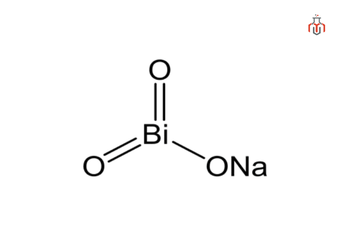
CAS No.: 12232-99-4
Synonyms: Sodium Bismuth Oxide, sodium bismuthate(V), bismuth sodium trioxide, bismuth sodium oxide (BiNaO3), bismuthate (BiO31-), sodium oxobismuthinolate oxide.
| Physical Properties | |
| Chemical formula | BiNaO3 |
| IUPAC Name | sodium oxido(dioxo)bismuth |
| Molecular weight | 279.968 g/mol |
| Solubility | Insoluble in water |
| Density | 6.50 g/cm3 |
| Appearance | A yellowish-brown amorphous powder |
| Chemical Properties | |
| Color | Yellow |
| Physical State | Solid |
| Melting Point | >300°C |
| Odor | Slight acetic acid |
| Pictograms : |  |
| Hazard Statements : | H302 – Harmful if swallowed |
| Precautionary Statements: | P264: Wash hands, forearms and face thoroughly after handling. P270: Do not eat, drink or smoke when using this product. P301+P312: IF SWALLOWED: Call a POISON CENTRE or doctor if you feel unwell |
..
Sodium bismuthate is a versatile inorganic compound with the chemical formula NaBiO₃. It typically occurs as a yellowish solid and is recognized for its powerful oxidizing properties. The compound is somewhat hygroscopic and is unusual among sodium salts because it is essentially insoluble in cold water. This property can be useful in chemical reactions, as the solid reagent can be readily separated from the reaction mixture after use. The strong oxidative behavior of sodium bismuthate is associated with bismuth in the +5 oxidation state. Its combination of high oxidation strength and low aqueous solubility makes it particularly valuable as an oxidizing reagent in analytical chemistry and laboratory research.
CAS No.: 12232-99-4
Synonyms: Sodium Bismuth Oxide, sodium bismuthate(V), bismuth sodium trioxide, bismuth sodium oxide (BiNaO3), bismuthate (BiO31-), sodium oxobismuthinolate oxide.
| Physical Properties | |
| Chemical formula | BiNaO3 |
| IUPAC Name | sodium oxido(dioxo)bismuth |
| Molecular weight | 279.968 g/mol |
| Solubility | Insoluble in water |
| Density | 6.50 g/cm3 |
| Appearance | A yellowish-brown amorphous powder |
| Chemical Properties | |
| Color | Yellow |
| Physical State | Solid |
| Melting Point | >300°C |
| Odor | Slight acetic acid |
| Pictograms : | |
| Hazard Statements : | H302 – Harmful if swallowed |
| Precautionary Statements: | P264: Wash hands, forearms and face thoroughly after handling. P270: Do not eat, drink or smoke when using this product. P301+P312: IF SWALLOWED: Call a POISON CENTRE or doctor if you feel unwell |
..
