

Potassium thiocyanate is an inorganic salt with the molecular formula KSCN. It consists of potassium ions (K⁺) and thiocyanate ions (SCN⁻), with thiocyanate classified as a pseudohalide. The compound normally occurs as colorless, deliquescent crystals that readily absorb moisture from the surrounding air. It is soluble in water and has a relatively low melting point compared with many inorganic salts. An important chemical characteristic of potassium thiocyanate is its capacity to interact with metal ions and form coordination complexes. This action makes it particularly valuable in laboratory chemistry and it is used in metal-ion analysis, coordination chemistry and the preparation of thiocyanate-containing compounds.
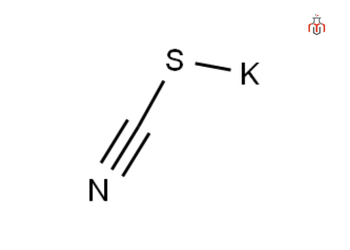
CAS No.: 333-20-0
Synonyms: Potassium rhodanide, potassium sulfocyanate, potassium isothiocyanate.
| Physical Properties | |
| Chemical formula | KSCN |
| IUPAC Name | Potassium Thiocyanate |
| Molecular weight | 97.18 g/mol |
| Solubility | Soluble in water, acetone, and alcohol |
| Density | 1.89 g/cm3 |
| Appearance | Clear colorless solution |
| Storage | Store at room temperature |
| Chemical Properties | |
| Color | Colorless |
| Physical State | Solid |
| Melting Point | 173 °C |
| Boiling Point | 500 °C |
| Ph | 5.3 – 8.7 at 97.2 g/l at 25 °C |
| Odor | Odorless |
| Pictograms : |  |
| Hazard Statements : | H412: Harmful to aquatic life with long-lasting effects. H302 + H312 + H332: Harmful if swallowed, in contact with skin or if inhaled. |
| Precautionary Statements: | P261: Avoid breathing dust/fume/gas/mist/vapors/spray. P270: Do not eat, drink or smoke when using this product. P264: Wash face, hands and any exposed skin thoroughly after handling. P271: Use only outdoors or in a well-ventilated area. P280: Wear protective gloves/protective clothing/eye protection/face protection. P302 + P352: IF ON SKIN: Wash with plenty of soap and water. P304 + P340: IF INHALED: Remove person to fresh air and keep comfortable for breathing. P312: Call a POISON CENTER or doctor if you feel unwell. P362 + P364: Take off contaminated clothing and wash it before reuse. |
Potassium thiocyanate is an inorganic salt with the molecular formula KSCN. It consists of potassium ions (K⁺) and thiocyanate ions (SCN⁻), with thiocyanate classified as a pseudohalide. The compound normally occurs as colorless, deliquescent crystals that readily absorb moisture from the surrounding air. It is soluble in water and has a relatively low melting point compared with many inorganic salts. An important chemical characteristic of potassium thiocyanate is its capacity to interact with metal ions and form coordination complexes. This action makes it particularly valuable in laboratory chemistry and it is used in metal-ion analysis, coordination chemistry and the preparation of thiocyanate-containing compounds.
CAS No.: 333-20-0
Synonyms: Potassium rhodanide, potassium sulfocyanate, potassium isothiocyanate.
| Physical Properties | |
| Chemical formula | KSCN |
| IUPAC Name | Potassium Thiocyanate |
| Molecular weight | 97.18 g/mol |
| Solubility | Soluble in water, acetone, and alcohol |
| Density | 1.89 g/cm3 |
| Appearance | Clear colorless solution |
| Storage | Store at room temperature |
| Chemical Properties | |
| Color | Colorless |
| Physical State | Solid |
| Melting Point | 173 °C |
| Boiling Point | 500 °C |
| Ph | 5.3 – 8.7 at 97.2 g/l at 25 °C |
| Odor | Odorless |
| Pictograms : | |
| Hazard Statements : | H412: Harmful to aquatic life with long-lasting effects. H302 + H312 + H332: Harmful if swallowed, in contact with skin or if inhaled. |
| Precautionary Statements: | P261: Avoid breathing dust/fume/gas/mist/vapors/spray. P270: Do not eat, drink or smoke when using this product. P264: Wash face, hands and any exposed skin thoroughly after handling. P271: Use only outdoors or in a well-ventilated area. P280: Wear protective gloves/protective clothing/eye protection/face protection. P302 + P352: IF ON SKIN: Wash with plenty of soap and water. P304 + P340: IF INHALED: Remove person to fresh air and keep comfortable for breathing. P312: Call a POISON CENTER or doctor if you feel unwell. P362 + P364: Take off contaminated clothing and wash it before reuse. |
