

Potassium carbonate is an inorganic compound with the chemical formula K₂CO₃. It is the dipotassium salt of carbonic acid and consists of potassium ions and carbonate ions. The compound generally occurs as an odorless white powder or solid and readily absorbs moisture from the surrounding air. It is highly soluble in water and produces a strongly alkaline solution, while it is insoluble in ethanol. It is commonly derived from potash and can be produced by reacting potassium hydroxide with carbon dioxide. Potassium carbonate is widely used in the manufacture of glass and soap where its alkalinity and chemical reactivity are particularly beneficial.
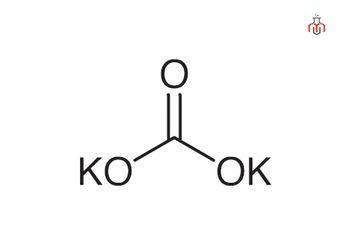
CAS No.: 584-08-7
Synonyms: Carbonate of potash, dipotassium carbonate, potcarb, sub-carbonate of potash, pearl ash, pearlash, potash, salt of wormwood.
| Physical Properties | |
| Chemical formula | K2CO3 |
| IUPAC Name | dipotassium;carbonate |
| Molecular weight | 138.205 g/mol |
| Solubility | Soluble in water |
| Density | 2.43 g/cm3 |
| Appearance | Hygroscopic white crystalline powder or granules |
| Chemical Properties | |
| Color | White |
| Physical State | Solid |
| Melting Point | 891 °C |
| Ph Value | 11 – 13 at 138 g/l at 25 °C |
| Odor | Odorless |
| Pictograms : |  |
| Hazard Statements : | H315: Causes skin irritation H319: Causes serious eye irritation H335: May cause respiratory irritation |
| Precautionary Statements: | P261: Avoid breathing dust/fume/gas/mist/vapours/spray P280: Wear protective gloves P302+P352: IF ON SKIN: Wash with plenty of soap and water P305+P351+P338: IF IN EYES: Rinse cautiously with water for several minutes. Remove contact lenses, if present and easy to do. Continue rinsing P312: Call a POISON CENTRE/doctor if you feel unwell P403+P233: Store in a well-ventilated place. Keep container tightly closed P501: Dispose of contents/container to an industrial combustion plant |
Potassium carbonate is an inorganic compound with the chemical formula K₂CO₃. It is the dipotassium salt of carbonic acid and consists of potassium ions and carbonate ions. The compound generally occurs as an odorless white powder or solid and readily absorbs moisture from the surrounding air. It is highly soluble in water and produces a strongly alkaline solution, while it is insoluble in ethanol. It is commonly derived from potash and can be produced by reacting potassium hydroxide with carbon dioxide. Potassium carbonate is widely used in the manufacture of glass and soap where its alkalinity and chemical reactivity are particularly beneficial.
CAS No.: 584-08-7
Synonyms: Carbonate of potash, dipotassium carbonate, potcarb, sub-carbonate of potash, pearl ash, pearlash, potash, salt of wormwood.
| Physical Properties | |
| Chemical formula | K2CO3 |
| IUPAC Name | dipotassium;carbonate |
| Molecular weight | 138.205 g/mol |
| Solubility | Soluble in water |
| Density | 2.43 g/cm3 |
| Appearance | Hygroscopic white crystalline powder or granules |
| Chemical Properties | |
| Color | White |
| Physical State | Solid |
| Melting Point | 891 °C |
| Ph Value | 11 – 13 at 138 g/l at 25 °C |
| Odor | Odorless |
| Pictograms : | |
| Hazard Statements : | H315: Causes skin irritation H319: Causes serious eye irritation H335: May cause respiratory irritation |
| Precautionary Statements: | P261: Avoid breathing dust/fume/gas/mist/vapours/spray P280: Wear protective gloves P302+P352: IF ON SKIN: Wash with plenty of soap and water P305+P351+P338: IF IN EYES: Rinse cautiously with water for several minutes. Remove contact lenses, if present and easy to do. Continue rinsing P312: Call a POISON CENTRE/doctor if you feel unwell P403+P233: Store in a well-ventilated place. Keep container tightly closed P501: Dispose of contents/container to an industrial combustion plant |
