

N-1 Naphthyl Ethylene Diamine is an organic compound with a conjugated naphthyl ring structure and the chemical formula C₁₂H₁₄N₂·2HCl. It acts as a strong electron donor and can form charge-transfer complexes with different electron acceptors. The compound generally occurs as a white to light tan or gray crystalline solid or off-white powder. Its structure enables characteristic interactions with various chemical species and the formation of strongly colored products. The free base is also known as the Bratton-Marshall reagent. These chemical and chromogenic properties make the compound particularly important in analytical and research chemistry.
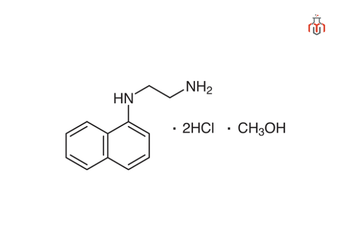
CAS No.: 1945-77-3
Synonyms: Bratton-Marshall Reagent, N-(1-Naphthyl)ethylenediamine dihydrochloride.
| Physical Properties | |
| Chemical formula | C12H16Cl2N2 |
| IUPAC Name | N1-(Naphthalen-1-yl)ethane-1,2-diamine |
| Molecular weight | 259.18 g/mol |
| Solubility | Soluble in water |
| Density | 380 kg/m3 |
| Appearance | White to Light yellow to Light orange powder to crystal |
| Storage | Store at room temperature |
| Chemical Properties | |
| Color | White to off-white to pale brown |
| Physical State | Solid |
| Melting Point | 194-198 °C |
| Odor | Odorless |
| Pictograms : |  |
| Hazard Statements : | H315: Causes skin irritation. H319: Causes serious eye irritation. H335: May cause respiratory irritation. |
| Precautionary Statements: | P261: Avoid breathing dust/fume/gas/mist/vapours/spray. P302+P352: IF ON SKIN: Wash with plenty of water. P305+P351+P338: IF IN EYES: Rinse cautiously with water for several minutes. Remove contact lenses, if present and easy to do. Continue rinsing. |
N-1 Naphthyl Ethylene Diamine is an organic compound with a conjugated naphthyl ring structure and the chemical formula C₁₂H₁₄N₂·2HCl. It acts as a strong electron donor and can form charge-transfer complexes with different electron acceptors. The compound generally occurs as a white to light tan or gray crystalline solid or off-white powder. Its structure enables characteristic interactions with various chemical species and the formation of strongly colored products. The free base is also known as the Bratton-Marshall reagent. These chemical and chromogenic properties make the compound particularly important in analytical and research chemistry.
CAS No.: 1945-77-3
Synonyms: Bratton-Marshall Reagent, N-(1-Naphthyl)ethylenediamine dihydrochloride.
| Physical Properties | |
| Chemical formula | C12H16Cl2N2 |
| IUPAC Name | N1-(Naphthalen-1-yl)ethane-1,2-diamine |
| Molecular weight | 259.18 g/mol |
| Solubility | Soluble in water |
| Density | 380 kg/m3 |
| Appearance | White to Light yellow to Light orange powder to crystal |
| Storage | Store at room temperature |
| Chemical Properties | |
| Color | White to off-white to pale brown |
| Physical State | Solid |
| Melting Point | 194-198 °C |
| Odor | Odorless |
| Pictograms : | |
| Hazard Statements : | H315: Causes skin irritation. H319: Causes serious eye irritation. H335: May cause respiratory irritation. |
| Precautionary Statements: | P261: Avoid breathing dust/fume/gas/mist/vapours/spray. P302+P352: IF ON SKIN: Wash with plenty of water. P305+P351+P338: IF IN EYES: Rinse cautiously with water for several minutes. Remove contact lenses, if present and easy to do. Continue rinsing. |
