

Mercuric nitrate is also known as mercury(II) nitrate, is an inorganic mercury salt of nitric acid with the chemical formula Hg(NO₃)₂. It consists of mercury(II) ions and nitrate ions and may also occur in hydrated forms represented as Hg(NO₃)₂·xH₂O. The anhydrous and hydrated forms generally appear as colorless or white, water-soluble crystalline solids. Mercury(II) nitrate has oxidizing properties and can participate in a variety of inorganic and organic chemical reactions. Its chemical behavior also allows the formation of other mercury salts and complexes under controlled reaction conditions. It is used as a reagent for the titrimetric determination of chloride ions in pharmaceuticals and other samples, forming soluble mercuric chloride complexes. It is also used in histological techniques for tissue fixation and staining.
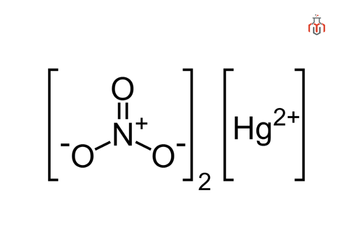
CAS No.: 7783-34-8
Synonyms: Mercuric nitrate monohydrate, Mercury(II) nitrate monohydrate, Mercury(II) nitrate.
| Physical Properties | |
| Chemical formula | Hg(NO₃)₂·H₂O |
| IUPAC Name | mercury(2+);dinitrate;hydrate |
| Molecular weight | 342.62 g/mol |
| Solubility | Soluble in water |
| Appearance | White to off-white crystalline powder |
| Storage | Store at room temperature |
| Chemical Properties | |
| Color | Off-White |
| Physical State | Solid |
| Melting Point | 79 °C |
| Density | 4.3 g/cm3 |
| Odor | Sharp, slight nitric acid odor |
Analytical Chemistry- Mercuric nitrate is used as an analytical reagent in titrimetric and precipitation-based methods especially for the detection and determination of halides.
Organic Synthesis- It is used as an oxidizing and mercurating reagent in organic reactions with specialized involving ketones such as acetone.
Mercury Compound Preparation- Mercury(II) nitrate is used as a precursor for preparing other mercury compounds, including mercuric oxide and high purity mercury salts.
Zeisel Test- It can be used as an alternative reagent to silver nitrate in the qualitative Zeisel test producing scarlet red mercury(II) iodide during iodide detection.
Environmental Analysis- Standardized mercuric nitrate solutions are used in laboratory procedures involving assessment of water quality and the determination of halide concentrations.
Laboratory Research- The compound is employed in specialized research involving mercury chemistry, oxidation reactions, complex formation and the preparation of mercury-containing materials.
| Pictograms : | 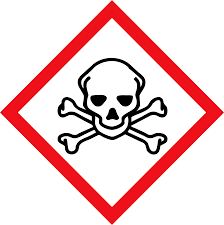   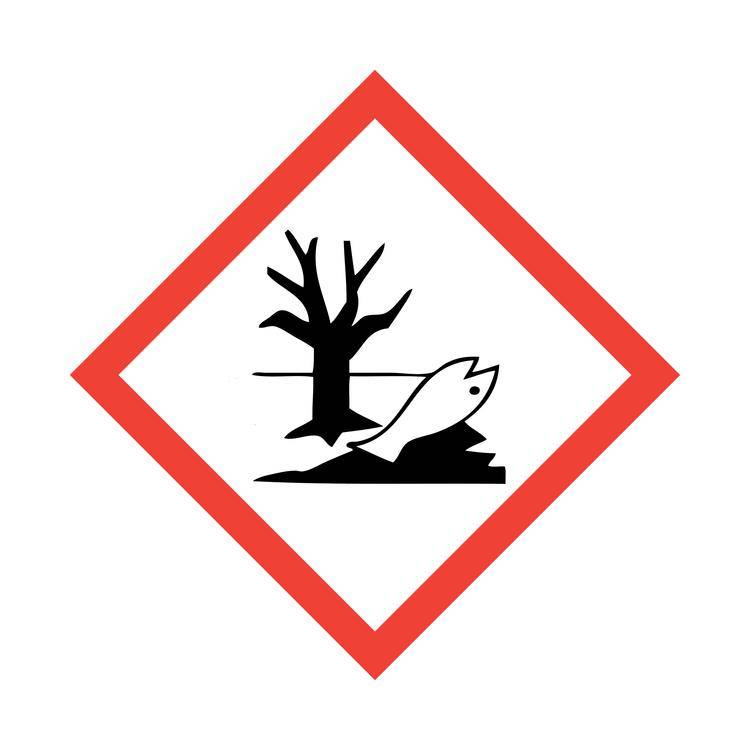 |
| Hazard Statements : | H300+H310+H330: Fatal if swallowed, in contact with skin or if inhaled. H373: May cause damage to organs through prolonged or repeated exposure. H410: Very toxic to aquatic life with long lasting effects. |
| Precautionary Statements: | P262: Do not get in eyes, on skin, or on clothing. P264: Wash hands, forearms and face thoroughly after handling. P273: Avoid release to the environment. P280: Wear protective gloves, respiratory protection, protective clothing, eye protection, face protection. P301+P310: IF SWALLOWED: Immediately call a POISON CENTER or doctor. P302+P352 – IF ON SKIN: Wash with plenty of water. P304+P340: IF INHALED: Remove person to fresh air and keep comfortable for breathing. |
Mercuric nitrate is also known as mercury(II) nitrate, is an inorganic mercury salt of nitric acid with the chemical formula Hg(NO₃)₂. It consists of mercury(II) ions and nitrate ions and may also occur in hydrated forms represented as Hg(NO₃)₂·xH₂O. The anhydrous and hydrated forms generally appear as colorless or white, water-soluble crystalline solids. Mercury(II) nitrate has oxidizing properties and can participate in a variety of inorganic and organic chemical reactions. Its chemical behavior also allows the formation of other mercury salts and complexes under controlled reaction conditions. It is used as a reagent for the titrimetric determination of chloride ions in pharmaceuticals and other samples, forming soluble mercuric chloride complexes. It is also used in histological techniques for tissue fixation and staining.
CAS No.: 7783-34-8
Synonyms: Mercuric nitrate monohydrate, Mercury(II) nitrate monohydrate, Mercury(II) nitrate.
| Physical Properties | |
| Chemical formula | Hg(NO₃)₂·H₂O |
| IUPAC Name | mercury(2+);dinitrate;hydrate |
| Molecular weight | 342.62 g/mol |
| Solubility | Soluble in water |
| Appearance | White to off-white crystalline powder |
| Storage | Store at room temperature |
| Chemical Properties | |
| Color | Off-White |
| Physical State | Solid |
| Melting Point | 79 °C |
| Density | 4.3 g/cm3 |
| Odor | Sharp, slight nitric acid odor |
Analytical Chemistry- Mercuric nitrate is used as an analytical reagent in titrimetric and precipitation-based methods especially for the detection and determination of halides.
Organic Synthesis- It is used as an oxidizing and mercurating reagent in organic reactions with specialized involving ketones such as acetone.
Mercury Compound Preparation- Mercury(II) nitrate is used as a precursor for preparing other mercury compounds, including mercuric oxide and high purity mercury salts.
Zeisel Test- It can be used as an alternative reagent to silver nitrate in the qualitative Zeisel test producing scarlet red mercury(II) iodide during iodide detection.
Environmental Analysis- Standardized mercuric nitrate solutions are used in laboratory procedures involving assessment of water quality and the determination of halide concentrations.
Laboratory Research- The compound is employed in specialized research involving mercury chemistry, oxidation reactions, complex formation and the preparation of mercury-containing materials.
| Pictograms : | |
| Hazard Statements : | H300+H310+H330: Fatal if swallowed, in contact with skin or if inhaled. H373: May cause damage to organs through prolonged or repeated exposure. H410: Very toxic to aquatic life with long lasting effects. |
| Precautionary Statements: | P262: Do not get in eyes, on skin, or on clothing. P264: Wash hands, forearms and face thoroughly after handling. P273: Avoid release to the environment. P280: Wear protective gloves, respiratory protection, protective clothing, eye protection, face protection. P301+P310: IF SWALLOWED: Immediately call a POISON CENTER or doctor. P302+P352 – IF ON SKIN: Wash with plenty of water. P304+P340: IF INHALED: Remove person to fresh air and keep comfortable for breathing. |
