

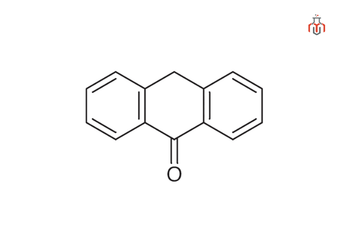
Anthrone is a tricyclic aromatic ketone and a derivative of anthracene, chemically classified as 9,10-dihydroanthracene carrying an oxo group at the C-9 position. It exists in tautomeric equilibrium with 9-anthrol and has been reported to possess radical scavenging properties. Anthrone occurs naturally as the structural backbone of several anthrone derivatives found in medicinal plants and has also been identified in certain microorganisms. Under acidic conditions, it readily reacts with carbohydrates to form a characteristic colored complex, a property that has made it a well-recognized analytical reagent in biochemical analysis.
CAS No.: 90-44-8
Synonyms: 9(10H)-Anthracenone, Carbothrone, anthracen-9(10H)-one
| Physical Properties | |
| Chemical formula | C14H10O |
| IUPAC Name | 10H-anthracen-9-one |
| Molecular weight | 194.23 g/mol |
| Solubility | Insoluble in water |
| Appearance | Yellow crystalline powder |
| Storage | Store at room temperature |
| Chemical Properties | |
| Color | Yellow crystalline |
| Physical State (at 20 °C) | Solid |
| Melting Point | 155 °C to 158 °C |
| Boiling Point | 721 °C |
| Odor | Light characteristic odor |
| Pictograms : |  |
| Hazard Statements : | H315: Causes skin irritation H319: Causes serious eye irritation H335: May cause respiratory irritation |
| Precautionary statements : | P261: Avoid breathing dust P280: Wear protective gloves/eye protection P302+P352: IF ON SKIN: Wash with plenty of water. P304+P340:IF INHALED: Remove person to fresh air and keep comfortable for breathing. P305+P351+P338: IF IN EYES: Rinse cautiously with water for several minutes. Remove contact lenses, if present and easy to do. Continue rinsing
|
Anthrone is a tricyclic aromatic ketone and a derivative of anthracene, chemically classified as 9,10-dihydroanthracene carrying an oxo group at the C-9 position. It exists in tautomeric equilibrium with 9-anthrol and has been reported to possess radical scavenging properties. Anthrone occurs naturally as the structural backbone of several anthrone derivatives found in medicinal plants and has also been identified in certain microorganisms. Under acidic conditions, it readily reacts with carbohydrates to form a characteristic colored complex, a property that has made it a well-recognized analytical reagent in biochemical analysis.
CAS No.: 90-44-8
Synonyms: 9(10H)-Anthracenone, Carbothrone, anthracen-9(10H)-one
| Physical Properties | |
| Chemical formula | C14H10O |
| IUPAC Name | 10H-anthracen-9-one |
| Molecular weight | 194.23 g/mol |
| Solubility | Insoluble in water |
| Appearance | Yellow crystalline powder |
| Storage | Store at room temperature |
| Chemical Properties | |
| Color | Yellow crystalline |
| Physical State (at 20 °C) | Solid |
| Melting Point | 155 °C to 158 °C |
| Boiling Point | 721 °C |
| Odor | Light characteristic odor |
| Pictograms : | |
| Hazard Statements : | H315: Causes skin irritation H319: Causes serious eye irritation H335: May cause respiratory irritation |
| Precautionary statements : | P261: Avoid breathing dust P280: Wear protective gloves/eye protection P302+P352: IF ON SKIN: Wash with plenty of water. P304+P340:IF INHALED: Remove person to fresh air and keep comfortable for breathing. P305+P351+P338: IF IN EYES: Rinse cautiously with water for several minutes. Remove contact lenses, if present and easy to do. Continue rinsing
|
