

Ammonium Oxalate is also known as diammonium oxalate. It is an ammonium salt of oxalic acid with the chemical formula (NH₄)₂C₂O₄. It is composed of two ammonium (NH₄⁺) cations and one oxalate (C₂O₄²⁻) anion, so the ionic structure is (NH4)2 [ C2O4 ]. It is commonly available as a white or colorless, odorless crystalline solid, which is easily soluble in water to give a clear solution. Ammonium oxalate is also available as the monohydrate ((NH₄)₂C₂O₄·H₂O), with slight variations in hydration depending on storage conditions. As it is a water-soluble oxalate salt, it exhibits good stability under normal conditions and readily interacts with certain metal ions through complex formation. This makes it a useful compound for analytical chemistry, laboratory research and chemical processing.
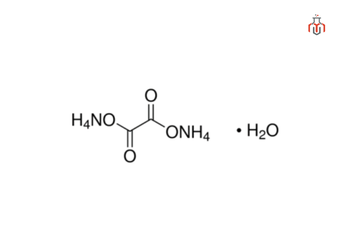
CAS No.: 6009-70-7
Synonyms: Diammonium oxalate, Ethanedioic acid diammonium salt
| Physical Properties | |
| Chemical formula | (NH₄)₂C₂O₄ |
| IUPAC Name | diazanium;oxalate |
| Molecular weight | 124.10 g/mol |
| Solubility | Soluble in water |
| Appearance | Crystalline Powder |
| Ph value | 6.4 |
| Density | 1.5 g/cm3 at 20 °C |
| Storage | Store in a cool, dry, ventilated area |
| Chemical Properties | |
| Color | White crystalline |
| Physical State (20 °C) | Solid |
| Melting Point | 133 °C |
| Vapor Pressure | <1 hPa ( 20 °C) |
| Odor | Slightly acetic acid-like |
| Pictograms : |  |
| Hazard Statements : | H302+H312: Harmful if swallowed or in contact with skin. H319: Causes serious eye irritation. |
| Precautionary statements : | P270: Do not eat, drink or smoke when using this product. P280: Wear protective gloves/eye protection. |
Ammonium Oxalate is also known as diammonium oxalate. It is an ammonium salt of oxalic acid with the chemical formula (NH₄)₂C₂O₄. It is composed of two ammonium (NH₄⁺) cations and one oxalate (C₂O₄²⁻) anion, so the ionic structure is (NH4)2 [ C2O4 ]. It is commonly available as a white or colorless, odorless crystalline solid, which is easily soluble in water to give a clear solution. Ammonium oxalate is also available as the monohydrate ((NH₄)₂C₂O₄·H₂O), with slight variations in hydration depending on storage conditions. As it is a water-soluble oxalate salt, it exhibits good stability under normal conditions and readily interacts with certain metal ions through complex formation. This makes it a useful compound for analytical chemistry, laboratory research and chemical processing.
CAS No.: 6009-70-7
Synonyms: Diammonium oxalate, Ethanedioic acid diammonium salt
| Physical Properties | |
| Chemical formula | (NH₄)₂C₂O₄ |
| IUPAC Name | diazanium;oxalate |
| Molecular weight | 124.10 g/mol |
| Solubility | Soluble in water |
| Appearance | Crystalline Powder |
| Ph value | 6.4 |
| Density | 1.5 g/cm3 at 20 °C |
| Storage | Store in a cool, dry, ventilated area |
| Chemical Properties | |
| Color | White crystalline |
| Physical State (20 °C) | Solid |
| Melting Point | 133 °C |
| Vapor Pressure | <1 hPa ( 20 °C) |
| Odor | Slightly acetic acid-like |
| Pictograms : | |
| Hazard Statements : | H302+H312: Harmful if swallowed or in contact with skin. H319: Causes serious eye irritation. |
| Precautionary statements : | P270: Do not eat, drink or smoke when using this product. P280: Wear protective gloves/eye protection. |
