

Sodium Hyaluronate is a sodium salt of hyaluronic acid, which is composed of d-glucuronic acid and N-acetylglucosamine. It occurs naturally in the skin and is used in various cosmetic and medical products. Sodium Hyaluronate possesses the ability to attract and retain moisture, providing cushioning and lubrication to the tissue. Due to the high viscosity of the solution, it provides mechanical support to tissues, cell layers, transports peptide growth factors and proteins to the site of action and facilitates wound healing.
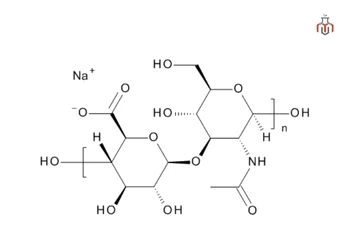
CAS No.: 9067-32-7
Synonyms: Hyaluronan sodium, Hyaluronic acid sodium salt, HA Sodium
| Properties | |
| Chemical formula | (C14 H21 N aN O11)n |
| Color | White |
| Molecular weight | 403.31 g/mol |
| Solubility | Soluble in water |
| Odor | Odorless |
| State | Powder |
| pH | 5.5-7.5 |
Sodium hyaluronate acts as a humectant, helping to retain moisture, lubricate the skin, and reduce the appearance of fine lines and wrinkles. It is widely used in moisturisers, creams, and lotions.
It is used as a dermal filler by professional cosmetic dermatologists to restore facial volume and improve skin contour.
Sodium hyaluronate is used to restore the natural lubricating and shock-absorbing properties of joints, helping to reduce pain and improve mobility in patients with osteoarthritis.
It is used in ophthalmic preparations such as eye drops, where it provides relief from discomfort and irritation, and is commonly used during corneal transplantation and cataract surgery.
| Pictograms : |
|
| Hazard Statements : | H302 (16.4%): Harmful if swallowed (Warning – Acute toxicity, oral) |
| Precautionary statements : | P264: Wash hands thoroughly after handling. |
Sodium Hyaluronate is a sodium salt of hyaluronic acid, which is composed of d-glucuronic acid and N-acetylglucosamine. It occurs naturally in the skin and is used in various cosmetic and medical products. Sodium Hyaluronate possesses the ability to attract and retain moisture, providing cushioning and lubrication to the tissue. Due to the high viscosity of the solution, it provides mechanical support to tissues, cell layers, transports peptide growth factors and proteins to the site of action and facilitates wound healing.
CAS No.: 9067-32-7
Synonyms: Hyaluronan sodium, Hyaluronic acid sodium salt, HA Sodium
| Properties | |
| Chemical formula | (C14 H21 N aN O11)n |
| Color | White |
| Molecular weight | 403.31 g/mol |
| Solubility | Soluble in water |
| Odor | Odorless |
| State | Powder |
| pH | 5.5-7.5 |
Sodium hyaluronate acts as a humectant, helping to retain moisture, lubricate the skin, and reduce the appearance of fine lines and wrinkles. It is widely used in moisturisers, creams, and lotions.
It is used as a dermal filler by professional cosmetic dermatologists to restore facial volume and improve skin contour.
Sodium hyaluronate is used to restore the natural lubricating and shock-absorbing properties of joints, helping to reduce pain and improve mobility in patients with osteoarthritis.
It is used in ophthalmic preparations such as eye drops, where it provides relief from discomfort and irritation, and is commonly used during corneal transplantation and cataract surgery.
| Pictograms : |
|
| Hazard Statements : | H302 (16.4%): Harmful if swallowed (Warning – Acute toxicity, oral) |
| Precautionary statements : | P264: Wash hands thoroughly after handling. |