

Glycine is a non-essential amino acid, meaning the body can synthesise it, and it can also be obtained through the diet. It is the simplest and smallest of the 20 proteinogenic amino acids. It is functions as an inhibitory neurotransmitter in the central nervous system and is widely used in cosmetics, skin-care formulations, pharmaceuticals, and various industrial applications.
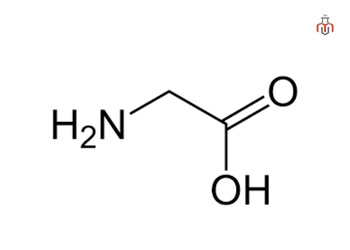
CAS No.: 56-40-6
Synonyms: Aminoethanoic acid, Aminoacetic acid, Glycocoll
| Physical Properties | |
| Chemical formula | C2H5NO2 |
| IUPAC name | 2-aminoacetic acid |
| Molecular weight | 75.07 g/mol |
| Solubility | soluble in pyridine sparingly soluble in ethanol insoluble in ether |
| Odor | Odorless |
| Taste | Sweet |
| Density | 1.1607 g/cm3 |
| Chemical Properties | |
| Color | White |
| State | Crystal Form |
| Melting point | 290 °C Decomposes |
| LogP | -3.21 |
| pKa | 2.37 (at 20 °C) |
| Pictograms : |
Not Available |
| Hazard Statements : | Not Available |
| Precautionary statements : | Not Available |
Glycine is a non-essential amino acid, meaning the body can synthesise it, and it can also be obtained through the diet. It is the simplest and smallest of the 20 proteinogenic amino acids. It is functions as an inhibitory neurotransmitter in the central nervous system and is widely used in cosmetics, skin-care formulations, pharmaceuticals, and various industrial applications.
CAS No.: 56-40-6
Synonyms: Aminoethanoic acid, Aminoacetic acid, Glycocoll
| Physical Properties | |
| Chemical formula | C2H5NO2 |
| IUPAC name | 2-aminoacetic acid |
| Molecular weight | 75.07 g/mol |
| Solubility | soluble in pyridine sparingly soluble in ethanol insoluble in ether |
| Odor | Odorless |
| Taste | Sweet |
| Density | 1.1607 g/cm3 |
| Chemical Properties | |
| Color | White |
| State | Crystal Form |
| Melting point | 290 °C Decomposes |
| LogP | -3.21 |
| pKa | 2.37 (at 20 °C) |
| Pictograms : |
Not Available |
| Hazard Statements : | Not Available |
| Precautionary statements : | Not Available |
