

Tetrazolium Blue Chloride is a tetrazolium-based dye that is used extensively in biochemical, microbiological, and histochemical research. It is widely used in studies of oxidation-reduction reactions because of its ability to indicate cellular metabolic activity. The dye is used in many laboratory assays, including the detection of reducing substances and enzyme activities. It is also used in the preparation of DNA-cation complexes and immunoadsorbents in the study of anti-DNA antibodies. In biological research, it is helpful for the study of bacteria, molds, seed viability, and tissue samples by giving visible color changes in reduction reactions. Its staining properties make it useful in research applications to study normal and abnormal cellular processes.
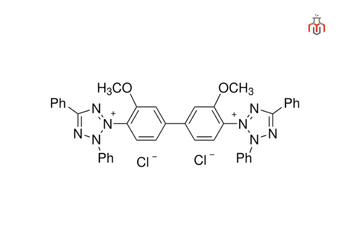
CAS No: 1871-22-3
Synonyms: Blue Tetrazolium chloride.
| Physical Properties | |
| Chemical formula | C40H32CI2N8O2 |
| IUPAC Name | 2-[4-[4-(3,5-diphenyltetrazol-2-ium-2-yl)-3-methoxyphenyl]-2-methoxyphenyl]-3,5-diphenyltetrazol-2-ium dichloride |
| Molecular weight | 727.6 g/mol |
| Storage | Store at room temperature |
| Chemical Properties | |
| Color | Pale yellow to lemon-yellow |
| Physical State | Solid at 20 °C |
| Melting Point | 255 °C |
| λmax | 253 nm |
| Solubility | Soluble in water |
| Odor | Odorless |
Reducing Sugar Assays: Tetrazolium blue chloride is used in assays for the detection of reducing sugars. It helps evaluate chemical reactions involving reducing agents in laboratory studies.
DNA Research Applications: It is used in the preparation of immunoadsorbents for anti-DNA antibodies and DNA-cation complexes. These applications help in studies involving DNA interactions and antibody research.
Histochemical Studies: It is a staining agent used for the study of oxidation-reduction enzymes in normal and cancer-associated tissues. This gives researchers a way to see the activity of cells by color development.
Seed Viability Research: The use of dye in seed germination and viability studies is to identify the active living tissues. It determines the biological activity according to the response of staining.
Microbiology Studies: It is a chemical used to stain bacteria and mold in research. It helps in studying or examining microbial growth and metabolic activity.
Biochemical Research: It is used in studies of cellular metabolism, enzyme activity, and reduction-based reactions. The dye is also used in research associated with biological dyes and metabolites.
| Pictograms : |  |
| Hazard Statements : | H350: May cause cancer |
| Precautionary statements : | P280: Wear protective gloves/eye protection P202: Do not handle until all safety precautions have been read and understood P308+P313: IF exposed or concerned: Get medical advice/attention |
Tetrazolium Blue Chloride is a tetrazolium-based dye that is used extensively in biochemical, microbiological, and histochemical research. It is widely used in studies of oxidation-reduction reactions because of its ability to indicate cellular metabolic activity. The dye is used in many laboratory assays, including the detection of reducing substances and enzyme activities. It is also used in the preparation of DNA-cation complexes and immunoadsorbents in the study of anti-DNA antibodies. In biological research, it is helpful for the study of bacteria, molds, seed viability, and tissue samples by giving visible color changes in reduction reactions. Its staining properties make it useful in research applications to study normal and abnormal cellular processes.
CAS No: 1871-22-3
Synonyms: Blue Tetrazolium chloride.
| Physical Properties | |
| Chemical formula | C40H32CI2N8O2 |
| IUPAC Name | 2-[4-[4-(3,5-diphenyltetrazol-2-ium-2-yl)-3-methoxyphenyl]-2-methoxyphenyl]-3,5-diphenyltetrazol-2-ium dichloride |
| Molecular weight | 727.6 g/mol |
| Storage | Store at room temperature |
| Chemical Properties | |
| Color | Pale yellow to lemon-yellow |
| Physical State | Solid at 20 °C |
| Melting Point | 255 °C |
| λmax | 253 nm |
| Solubility | Soluble in water |
| Odor | Odorless |
Reducing Sugar Assays: Tetrazolium blue chloride is used in assays for the detection of reducing sugars. It helps evaluate chemical reactions involving reducing agents in laboratory studies.
DNA Research Applications: It is used in the preparation of immunoadsorbents for anti-DNA antibodies and DNA-cation complexes. These applications help in studies involving DNA interactions and antibody research.
Histochemical Studies: It is a staining agent used for the study of oxidation-reduction enzymes in normal and cancer-associated tissues. This gives researchers a way to see the activity of cells by color development.
Seed Viability Research: The use of dye in seed germination and viability studies is to identify the active living tissues. It determines the biological activity according to the response of staining.
Microbiology Studies: It is a chemical used to stain bacteria and mold in research. It helps in studying or examining microbial growth and metabolic activity.
Biochemical Research: It is used in studies of cellular metabolism, enzyme activity, and reduction-based reactions. The dye is also used in research associated with biological dyes and metabolites.
| Pictograms : | |
| Hazard Statements : | H350: May cause cancer |
| Precautionary statements : | P280: Wear protective gloves/eye protection P202: Do not handle until all safety precautions have been read and understood P308+P313: IF exposed or concerned: Get medical advice/attention |
