

Reactive Blue 4 is an anthraquinone-based reactive dye characterized by its intense blue color and strong affinity for proteins and other biomolecules. Its color stability and binding properties make it a valuable reagent for biological research, textile processing, analytical studies, and environmental applications. It is commonly used in laboratory research to stain proteins on electrophoretic gels. It has been used for labeling antibodies. It can also interact with proteins, making it a useful immobilized ligand in protein separation systems. It is also employed in textile dyeing because it forms strong bonds with fibers, producing durable color. It is also studied in environmental research as a model dye for studying dye degradation and wastewater treatment methods.
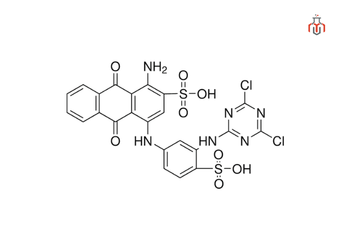
CAS No.: 13324-20-4
Synonyms: Blue MR; Ambifix Blue CR; Brill.Blue X-BR; REACTIVE BLUE 4; Ostazin Blue S-R; Reactive Blue MR.
| Physical Properties | |
| Chemical formula | C23H14CI2N6O8S2 |
| IUPAC Name | 1-amino-4-[3-[(4,6-dichloro-1,3,5-triazin-2-yl)amino]-4-sulfoanilino]-9,10-dioxoanthracene-2-sulfonic acid |
| Molecular weight | 637.4 g/mol |
| Solubility | Soluble in water |
| Form | Powder |
| Chemical Properties | |
| Color | Blue to dark blue |
| Physical state | Solid |
| λmax | 595 nm |
| Pictograms : | 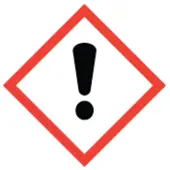 |
| Hazard Statements : | H315: Causes skin irritation H319: Causes serious eye irritation |
| Precautionary statements : | P264: Wash hands thoroughly after handling. P305+P351+P338: IF IN EYES: Rinse cautiously with water for several minutes. Remove contact lenses, if present and easy to do. Continue rinsing. P332+P313: IF SKIN irritation occurs: Get medical advice/attention. P337+P313: IF eye irritation persists: Get medical advice/attention. |
Reactive Blue 4 is an anthraquinone-based reactive dye characterized by its intense blue color and strong affinity for proteins and other biomolecules. Its color stability and binding properties make it a valuable reagent for biological research, textile processing, analytical studies, and environmental applications. It is commonly used in laboratory research to stain proteins on electrophoretic gels. It has been used for labeling antibodies. It can also interact with proteins, making it a useful immobilized ligand in protein separation systems. It is also employed in textile dyeing because it forms strong bonds with fibers, producing durable color. It is also studied in environmental research as a model dye for studying dye degradation and wastewater treatment methods.
CAS No.: 13324-20-4
Synonyms: Blue MR; Ambifix Blue CR; Brill.Blue X-BR; REACTIVE BLUE 4; Ostazin Blue S-R; Reactive Blue MR.
| Physical Properties | |
| Chemical formula | C23H14CI2N6O8S2 |
| IUPAC Name | 1-amino-4-[3-[(4,6-dichloro-1,3,5-triazin-2-yl)amino]-4-sulfoanilino]-9,10-dioxoanthracene-2-sulfonic acid |
| Molecular weight | 637.4 g/mol |
| Solubility | Soluble in water |
| Form | Powder |
| Chemical Properties | |
| Color | Blue to dark blue |
| Physical state | Solid |
| λmax | 595 nm |
| Pictograms : | |
| Hazard Statements : | H315: Causes skin irritation H319: Causes serious eye irritation |
| Precautionary statements : | P264: Wash hands thoroughly after handling. P305+P351+P338: IF IN EYES: Rinse cautiously with water for several minutes. Remove contact lenses, if present and easy to do. Continue rinsing. P332+P313: IF SKIN irritation occurs: Get medical advice/attention. P337+P313: IF eye irritation persists: Get medical advice/attention. |
