
Methyl Green is a cationic (basic) triphenylmethane dye widely used in biological, diagnostic, and industrial applications. It is used in combination with Pyronin Y to achieve differential staining of biological specimens, distinguishing DNA in the nucleus from RNA in the cytoplasm. It is also used as a pH indicator, a counterstain in enzyme histochemistry, a tracking dye in gel electrophoresis, and a model cationic dye in wastewater treatment studies.
CAS No.: 7114-03-6
Synonyms: Basic Blue 20; Methyl green chloride
| Physical Properties | |
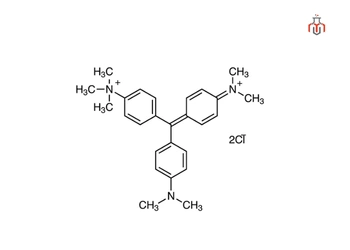
| Chemical formula | C26H33Cl2N3 |
| IUPAC Name | [4-[[4-(dimethylamino)phenyl]-(4-dimethylazaniumylidenecyclohexa -2,5-dien-1-ylidene)methyl]phenyl]-trimethylazanium dichloride |
| Molecular weight | 458.5 g/mol |
| Solubility | Soluble in Water and alcohol |
| Color | Dark green to black |
| Apperance | powder, or crystalline form |
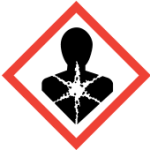
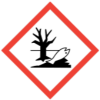
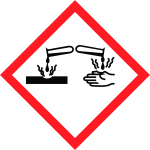
| Pictograms : | |
| Hazard Statements : | H314 Causes severe skin burns and eye damage |
| Precautionary statements : | P273 Avoid release to the environment P302+P352 IF ON SKIN: Wash with plenty of water |
Methyl Green is a cationic (basic) triphenylmethane dye widely used in biological, diagnostic, and industrial applications. It is used in combination with Pyronin Y to achieve differential staining of biological specimens, distinguishing DNA in the nucleus from RNA in the cytoplasm. It is also used as a pH indicator, a counterstain in enzyme histochemistry, a tracking dye in gel electrophoresis, and a model cationic dye in wastewater treatment studies.
CAS No.: 7114-03-6
Synonyms: Basic Blue 20; Methyl green chloride
| Physical Properties | |
| Chemical formula | C26H33Cl2N3 |
| IUPAC Name | [4-[[4-(dimethylamino)phenyl]-(4-dimethylazaniumylidenecyclohexa -2,5-dien-1-ylidene)methyl]phenyl]-trimethylazanium dichloride |
| Molecular weight | 458.5 g/mol |
| Solubility | Soluble in Water and alcohol |
| Color | Dark green to black |
| Apperance | powder, or crystalline form |
| Pictograms : | |
| Hazard Statements : | H314 Causes severe skin burns and eye damage |
| Precautionary statements : | P273 Avoid release to the environment P302+P352 IF ON SKIN: Wash with plenty of water |