
Ethidium bromide (EtBr) is a phenanthridinium dye, widely used in molecular biology as a fluorescent tag (nucleic acid stain). It is particularly valuable for detecting DNA and RNA in techniques such as agarose gel electrophoresis and polyacrylamide gel electrophoresis (PAGE). Ethidium bromide binds to nucleic acids by intercalating between adjacent base pairs of DNA or RNA, and exhibits enhanced fluorescence, allowing nucleic acid bands to be visualized under ultraviolet (UV) light.
CAS No.: 1239-45-8
Synonyms: Homidium Bromide;Homidii bromidum; Bromuro de homidio; Bromure d’homidium; EtBr
| Physical Properties | |
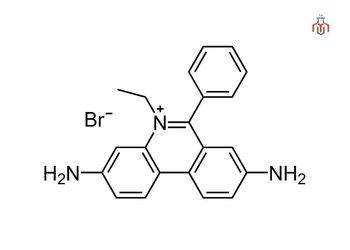
| Chemical formula | C21H20BrN3 |
| IUPAC Name | 3,8-diamino-5-ethyl-6-phenylphenanthridin-5-ium bromide |
| Molecular weight | 394.3 g/mol |
| Solubility | Soluble in water, slightly soluble in ethanol, and partially soluble in chloroform |
| Flash Point | >100 °C |
| Density | 1.3739 |
| Chemical Properties | |
| Colour | Purple-red |
| State | Crystalline powder |
| Melting point | 260-262 °C (Decomposes) |
| Odor | Odorless |
| pH | 4.4 (20°C, 10g/L in H2O) |
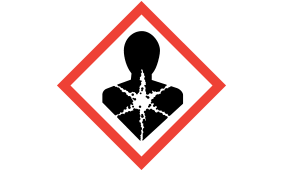
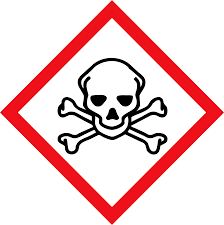
| Pictograms : | |
| Hazard Statements : | H302 Harmful if swallowed |
| Precautionary statements : | P201 Obtain special instructions before use |
Ethidium bromide (EtBr) is a phenanthridinium dye, widely used in molecular biology as a fluorescent tag (nucleic acid stain). It is particularly valuable for detecting DNA and RNA in techniques such as agarose gel electrophoresis and polyacrylamide gel electrophoresis (PAGE). Ethidium bromide binds to nucleic acids by intercalating between adjacent base pairs of DNA or RNA, and exhibits enhanced fluorescence, allowing nucleic acid bands to be visualized under ultraviolet (UV) light.
CAS No.: 1239-45-8
Synonyms: Homidium Bromide;Homidii bromidum; Bromuro de homidio; Bromure d’homidium; EtBr
| Physical Properties | |
| Chemical formula | C21H20BrN3 |
| IUPAC Name | 3,8-diamino-5-ethyl-6-phenylphenanthridin-5-ium bromide |
| Molecular weight | 394.3 g/mol |
| Solubility | Soluble in water, slightly soluble in ethanol, and partially soluble in chloroform |
| Flash Point | >100 °C |
| Density | 1.3739 |
| Chemical Properties | |
| Colour | Purple-red |
| State | Crystalline powder |
| Melting point | 260-262 °C (Decomposes) |
| Odor | Odorless |
| pH | 4.4 (20°C, 10g/L in H2O) |
| Pictograms : | |
| Hazard Statements : | H302 Harmful if swallowed |
| Precautionary statements : | P201 Obtain special instructions before use |