

Ethyl Orange is a synthetic azo dye closely related to Methyl Orange and is known for its pH-sensitive color behavior. It is a crystalline organic compound with limited solubility in water but readily soluble in organic solvents such as ethanol and dichloromethane. Its chemical structure gives it distinct optical and chemical applications and allows its color to change with variations in acidity. These properties make Ethyl Orange useful for laboratory applications as an acid-base indicator and staining reagent including titrations, analytical chemistry and selected biological studies.
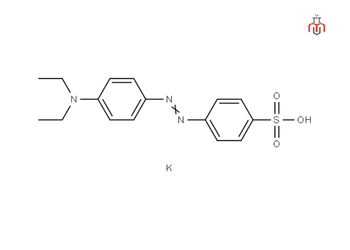
CAS No.: 13545-67-0
| Physical and Chemical Properties | |
| Chemical formula | C16H18N3NaO3S |
| IUPAC Name | potassium 4-[[4-(diethylamino)phenyl] diazenyl]benzenesulfonate |
| Molecular weight | 371.5 g/mol |
| Appearance | White powder |
| Storage | Store at 4° C |
| Pictograms : |  |
| Hazard Statements : | H315: Causes skin irritation H319: Causes serious eye irritation H335: May cause respiratory irritation |
| Precautionary Statements: | P261: Avoid breathing dust/fume/gas/mist/vapours/spray. P304+P340: IF INHALED: Remove victim to fresh air and Keep at rest in a position comfortable for breathing. P305+P351+P338: IF IN EYES: Rinse cautiously with water for several minutes. Remove contact lenses, if present and easy to do. Continuerinsing. P405: Store locked up. |
Ethyl Orange is a synthetic azo dye closely related to Methyl Orange and is known for its pH-sensitive color behavior. It is a crystalline organic compound with limited solubility in water but readily soluble in organic solvents such as ethanol and dichloromethane. Its chemical structure gives it distinct optical and chemical applications and allows its color to change with variations in acidity. These properties make Ethyl Orange useful for laboratory applications as an acid-base indicator and staining reagent including titrations, analytical chemistry and selected biological studies.
CAS No.: 13545-67-0
| Physical and Chemical Properties | |
| Chemical formula | C16H18N3NaO3S |
| IUPAC Name | potassium 4-[[4-(diethylamino)phenyl] diazenyl]benzenesulfonate |
| Molecular weight | 371.5 g/mol |
| Appearance | White powder |
| Storage | Store at 4° C |
| Pictograms : | |
| Hazard Statements : | H315: Causes skin irritation H319: Causes serious eye irritation H335: May cause respiratory irritation |
| Precautionary Statements: | P261: Avoid breathing dust/fume/gas/mist/vapours/spray. P304+P340: IF INHALED: Remove victim to fresh air and Keep at rest in a position comfortable for breathing. P305+P351+P338: IF IN EYES: Rinse cautiously with water for several minutes. Remove contact lenses, if present and easy to do. Continuerinsing. P405: Store locked up. |
