

Phloroglucinol Dihydrate is the crystalline dihydrate form of phloroglucinol, a polyhydroxy aromatic compound containing three hydroxyl groups on a benzene ring. It is generally appears as an off-white powder and has good solubility in water. Its three hydroxyl groups contribute to its characteristic reactivity and antioxidant properties. Phloroglucinol dihydrate can participate in color-forming reactions with aldehydes, carbohydrates, and lignin-related compounds. It is particularly valued as a spasmolytic agent for relieving colic and spasmodic pain of the digestive and biliary tracts and as an analytical reagent in laboratory research.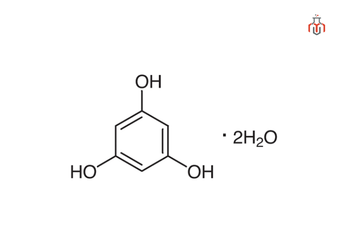
CAS No.: 6099-90-7
Synonyms: 1,3,5-Trihydroxybenzene dihydrate, 1,3,5-Benzenetriol dihydrate.
| Physical Properties | |
| Chemical formula | C6H10O5 |
| IUPAC Name | benzene-1,3,5-triol;dihydrate |
| Molecular weight | 162.14 g/mol |
| Solubility | Sparingly soluble |
| Appearance | White or almost white powder |
| Storage | Store at room temperature |
| Chemical Properties | |
| Color | White to beige |
| Physical State | Solid |
| Melting Point | 214 °C |
| Odor | Odorless |
| Pictograms : |  |
| Hazard Statements : | H315: Causes skin irritation H319: Causes serious eye irritation H335: May cause respiratory irritation |
| Precautionary Statements: | P280: Wear protective gloves/eye protection P305+P351+P338: IF IN EYES: Rinse cautiously with water for several minutes. Remove contact lenses, if present and easy to do. Continue rinsing |
Phloroglucinol Dihydrate is the crystalline dihydrate form of phloroglucinol, a polyhydroxy aromatic compound containing three hydroxyl groups on a benzene ring. It is generally appears as an off-white powder and has good solubility in water. Its three hydroxyl groups contribute to its characteristic reactivity and antioxidant properties. Phloroglucinol dihydrate can participate in color-forming reactions with aldehydes, carbohydrates, and lignin-related compounds. It is particularly valued as a spasmolytic agent for relieving colic and spasmodic pain of the digestive and biliary tracts and as an analytical reagent in laboratory research.
CAS No.: 6099-90-7
Synonyms: 1,3,5-Trihydroxybenzene dihydrate, 1,3,5-Benzenetriol dihydrate.
| Physical Properties | |
| Chemical formula | C6H10O5 |
| IUPAC Name | benzene-1,3,5-triol;dihydrate |
| Molecular weight | 162.14 g/mol |
| Solubility | Sparingly soluble |
| Appearance | White or almost white powder |
| Storage | Store at room temperature |
| Chemical Properties | |
| Color | White to beige |
| Physical State | Solid |
| Melting Point | 214 °C |
| Odor | Odorless |
| Pictograms : | |
| Hazard Statements : | H315: Causes skin irritation H319: Causes serious eye irritation H335: May cause respiratory irritation |
| Precautionary Statements: | P280: Wear protective gloves/eye protection P305+P351+P338: IF IN EYES: Rinse cautiously with water for several minutes. Remove contact lenses, if present and easy to do. Continue rinsing |
