

Calconcarboxylic Acid is a metallochromic indicator widely used for the determination of calcium ions by complexometric titration with EDTA. It is also known as the Patton-Reeder indicator, it functions as a chelating agent and provides accurate endpoint detection during calcium analysis, particularly at pH 12 in the presence of magnesium. The compound is soluble in water, sodium hydroxide, ethanol and methanol, forming a violet-colored solution in ethanol. Owing to its metal-binding properties, it is an important reagent in analytical chemistry, biochemical research, and trace metal analysis.
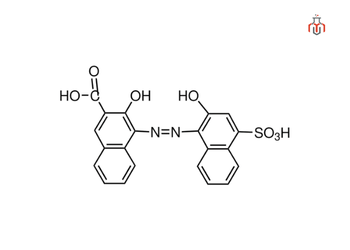
CAS No.: 3737-95-9
Synonyms: Patton-Reeder indicator, Calcon 3-carboxylic acid.
| Physical Properties | |
| Chemical formula | C21H14N2O7S |
| IUPAC Name | 3-hydroxy-4-[(2-hydroxy-4-sulfonaphthalen-1-yl) diazenyl]naphthalene-2-carboxylic acid |
| Molecular weight | 438.4 g/mol |
| Solubility | Slightly Soluble in water |
| Appearance | Dark purple to black powder |
| Storage | Store at room temperature |
| Chemical Properties | |
| Color | Dark red |
| Physical State | Solid |
| Melting Point | 300 °C |
| λmax | 569 – 572 nm |
| Odor | Odorless |
| Pictograms : |  |
| Hazard Statements : | H315: Causes skin irritation. H319: Causes serious eye irritation. H335: May cause respiratory irritation. |
| Precautionary statements : | P261: Avoid breathing dust/fume/gas/mist/vapours/spray. P280: Wear protective gloves/protective clothing/eye protection/face protection/hearing protection. P312: Call a POISON CENTRE/doctor if you feel unwell. P321: Specific treatment (see on this label). P403+P233: Store in a well-ventilated place. Keep container tightly closed. P501: Dispose of contents/container to industrial combustion plant. |
Calconcarboxylic Acid is a metallochromic indicator widely used for the determination of calcium ions by complexometric titration with EDTA. It is also known as the Patton-Reeder indicator, it functions as a chelating agent and provides accurate endpoint detection during calcium analysis, particularly at pH 12 in the presence of magnesium. The compound is soluble in water, sodium hydroxide, ethanol and methanol, forming a violet-colored solution in ethanol. Owing to its metal-binding properties, it is an important reagent in analytical chemistry, biochemical research, and trace metal analysis.
CAS No.: 3737-95-9
Synonyms: Patton-Reeder indicator, Calcon 3-carboxylic acid.
| Physical Properties | |
| Chemical formula | C21H14N2O7S |
| IUPAC Name | 3-hydroxy-4-[(2-hydroxy-4-sulfonaphthalen-1-yl) diazenyl]naphthalene-2-carboxylic acid |
| Molecular weight | 438.4 g/mol |
| Solubility | Slightly Soluble in water |
| Appearance | Dark purple to black powder |
| Storage | Store at room temperature |
| Chemical Properties | |
| Color | Dark red |
| Physical State | Solid |
| Melting Point | 300 °C |
| λmax | 569 – 572 nm |
| Odor | Odorless |
| Pictograms : | |
| Hazard Statements : | H315: Causes skin irritation. H319: Causes serious eye irritation. H335: May cause respiratory irritation. |
| Precautionary statements : | P261: Avoid breathing dust/fume/gas/mist/vapours/spray. P280: Wear protective gloves/protective clothing/eye protection/face protection/hearing protection. P312: Call a POISON CENTRE/doctor if you feel unwell. P321: Specific treatment (see on this label). P403+P233: Store in a well-ventilated place. Keep container tightly closed. P501: Dispose of contents/container to industrial combustion plant. |
