

Ammonium acetate is also known as Spirit of Mindererus in aqueous solution. It is an ammonium salt with the chemical formula NH₄CH₃CO₂ (NH₄C₂H₃O₂). It is produced by the reaction of ammonia with acetic acid and appears as a white, hygroscopic, soluble in water crystalline solid. It has a relatively low melting point for a salt and has excellent buffering applications due to the presence of both ammonium and acetate ions. It is inexpensive and environmentally friendly that is commercially available and widely used as a laboratory reagent and chemical intermediate.
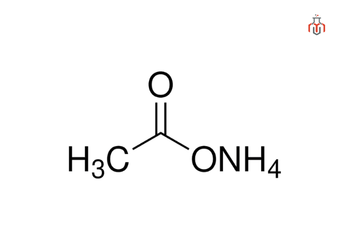
CAS No.: 631-61-8
Synonyms: AMMONIUM ACETATE, acetic acid ammonium salt, DTXSID5023873
| Physical Properties | |
| Chemical formula | C2H7NO2 |
| IUPAC Name | azanium acetate |
| Molecular weight | 77.08 g/mol |
| Solubility | Soluble in water |
| Appearance | White solid Crystals |
| Density | 1.073 g/cm3 (25 °C) |
| Storage | Store at room temperature |
| Chemical Properties | |
| Color | Colorless Crystals |
| Physical State (20 °C) | Solid |
| Melting Point | 113 °C |
| Odor | Slightly acetic acid-like |
| Pictograms : |  |
| Hazard Statements : | H315: Causes skin irritation. H319: Causes serious eye irritation. |
| Precautionary statements : | P264: Wash face, hands and any exposed skin thoroughly after handling. P280: Wear protective gloves/protective clothing/eye protection/face protection. |
Ammonium acetate is also known as Spirit of Mindererus in aqueous solution. It is an ammonium salt with the chemical formula NH₄CH₃CO₂ (NH₄C₂H₃O₂). It is produced by the reaction of ammonia with acetic acid and appears as a white, hygroscopic, soluble in water crystalline solid. It has a relatively low melting point for a salt and has excellent buffering applications due to the presence of both ammonium and acetate ions. It is inexpensive and environmentally friendly that is commercially available and widely used as a laboratory reagent and chemical intermediate.
CAS No.: 631-61-8
Synonyms: AMMONIUM ACETATE, acetic acid ammonium salt, DTXSID5023873
| Physical Properties | |
| Chemical formula | C2H7NO2 |
| IUPAC Name | azanium acetate |
| Molecular weight | 77.08 g/mol |
| Solubility | Soluble in water |
| Appearance | White solid Crystals |
| Density | 1.073 g/cm3 (25 °C) |
| Storage | Store at room temperature |
| Chemical Properties | |
| Color | Colorless Crystals |
| Physical State (20 °C) | Solid |
| Melting Point | 113 °C |
| Odor | Slightly acetic acid-like |
| Pictograms : | |
| Hazard Statements : | H315: Causes skin irritation. H319: Causes serious eye irritation. |
| Precautionary statements : | P264: Wash face, hands and any exposed skin thoroughly after handling. P280: Wear protective gloves/protective clothing/eye protection/face protection. |
