

2,6-Dichloroindophenol Sodium Salt, also known as 2,6-Dichlorophenolindophenol Sodium Salt Dihydrate (DCPIP, DCIP, or DPIP), is a synthetic indophenol dye widely used as a redox indicator and analytical reagent. It is best known for the determination of vitamin C (ascorbic acid), where it changes from its blue oxidized form to a colorless reduced form during the reaction. In its oxidized state, it shows a maximum absorption of about 600 nm, making it valuable for spectrophotometric and oxidation-reduction analyses.
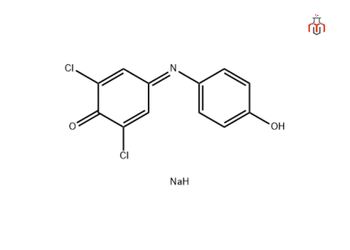
CAS No.: 620-45-1
Synonyms: 2,6-Dichlorobenzenone-indophenolsodium salt, Tillman’s reagent, 2,6-Dichlorophenol Indophenol Sodium Salt
| Physical Properties | |
| Chemical formula | C12H6Cl2NNaO2 |
| IUPAC Name | sodium 4-[(3,5-dichloro-4-oxocyclohexa-2,5-dien-1-ylidene)amino]phenolate |
| Molecular weight | 290.07 g/mol |
| Solubility | Soluble in water |
| Appearance | Dark green to Dark purple powder |
| Storage | Store at room temperature |
| Chemical Properties | |
| Color | Dark Green |
| Physical State at 20 °C | Solid |
| Melting Point | >300 °C |
| Odor | Odorless |
| Pictograms : |  |
| Hazard Statements : | H315: Causes skin irritation. H319: Causes serious eye irritation. H335: May cause respiratory irritation. |
| Precautionary statements : | P261: Avoid breathing dust/fume/gas/mist/vapours/spray. P304+P340: IF INHALED: Remove victim to fresh air and keep at rest in a position comfortable for breathing. P305+P351+P338: IF IN EYES: Rinse cautiously with water for several minutes. Remove contact lenses, if present and easy to do. Continue rinsing.
|
2,6-Dichloroindophenol Sodium Salt, also known as 2,6-Dichlorophenolindophenol Sodium Salt Dihydrate (DCPIP, DCIP, or DPIP), is a synthetic indophenol dye widely used as a redox indicator and analytical reagent. It is best known for the determination of vitamin C (ascorbic acid), where it changes from its blue oxidized form to a colorless reduced form during the reaction. In its oxidized state, it shows a maximum absorption of about 600 nm, making it valuable for spectrophotometric and oxidation-reduction analyses.
CAS No.: 620-45-1
Synonyms: 2,6-Dichlorobenzenone-indophenolsodium salt, Tillman’s reagent, 2,6-Dichlorophenol Indophenol Sodium Salt
| Physical Properties | |
| Chemical formula | C12H6Cl2NNaO2 |
| IUPAC Name | sodium 4-[(3,5-dichloro-4-oxocyclohexa-2,5-dien-1-ylidene)amino]phenolate |
| Molecular weight | 290.07 g/mol |
| Solubility | Soluble in water |
| Appearance | Dark green to Dark purple powder |
| Storage | Store at room temperature |
| Chemical Properties | |
| Color | Dark Green |
| Physical State at 20 °C | Solid |
| Melting Point | >300 °C |
| Odor | Odorless |
| Pictograms : | |
| Hazard Statements : | H315: Causes skin irritation. H319: Causes serious eye irritation. H335: May cause respiratory irritation. |
| Precautionary statements : | P261: Avoid breathing dust/fume/gas/mist/vapours/spray. P304+P340: IF INHALED: Remove victim to fresh air and keep at rest in a position comfortable for breathing. P305+P351+P338: IF IN EYES: Rinse cautiously with water for several minutes. Remove contact lenses, if present and easy to do. Continue rinsing.
|
