
Methylene Blue Anhydrous is a synthetic heterocyclic compound widely recognized for its distinctive staining properties and broad research applications. It is a dark green crystalline powder with a metallic sheen in its dry form. When dissolved in water or alcohol, it produces a deep blue solution. It is a cationic (basic) dye, binding easily to negatively charged cellular components such as DNA and RNA, which makes it a useful stain for biological, microbiological, and histological studies.
Beyond laboratory staining, it has been investigated for its oxidation-reduction properties and has been proven to be useful in scientific research, analytical testing, aquaculture, and specialized medical applications. It has also been investigated for its antioxidant, antimicrobial, and neuroprotective potential in pharmaceutical research.
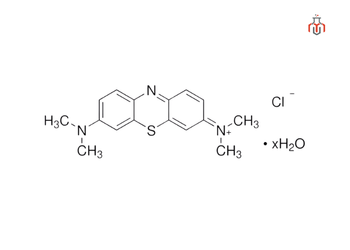
CAS No- 61-73-4
Synonyms: Basic Blue 9, Solvent Blue 8, Swiss Blue
| Physical Properties | |
| Chemical formula | C16H18ClN3S |
| IUPAC Name | [7-(dimethylamino)phenothiazin-3-ylidene]-dimethylazanium chloride |
| Molecular weight | 319.9 g/mol |
| Solubility | Soluble in water and Chloroform |
| Insolubility | Ether |
| Density | 1.757 g/cm3 (22 °C) |
| Appearance | Dark green crystals or powder |
| Storage | Store at room temperature |
| Chemical Properties | |
| Color | Dark Green |
| Physical State | Solid |
| Melting Point | 180 – 190 °C |
| λmax | 664 nm |
| Odor | Odorless |
| Pictograms : | 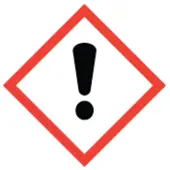 |
| Hazard Statements : | H302: Harmful if swallowed |
| Precautionary statements : | P270: Do not eat, drink, or smoke when using this product P264: Wash hands thoroughly after handling P301+P312: IF SWALLOWED: Call a POISON CENTER/doctor if you feel unwell |
Methylene Blue Anhydrous is a synthetic heterocyclic compound widely recognized for its distinctive staining properties and broad research applications. It is a dark green crystalline powder with a metallic sheen in its dry form. When dissolved in water or alcohol, it produces a deep blue solution. It is a cationic (basic) dye, binding easily to negatively charged cellular components such as DNA and RNA, which makes it a useful stain for biological, microbiological, and histological studies.
Beyond laboratory staining, it has been investigated for its oxidation-reduction properties and has been proven to be useful in scientific research, analytical testing, aquaculture, and specialized medical applications. It has also been investigated for its antioxidant, antimicrobial, and neuroprotective potential in pharmaceutical research.
CAS No- 61-73-4
Synonyms: Basic Blue 9, Solvent Blue 8, Swiss Blue
| Physical Properties | |
| Chemical formula | C16H18ClN3S |
| IUPAC Name | [7-(dimethylamino)phenothiazin-3-ylidene]-dimethylazanium chloride |
| Molecular weight | 319.9 g/mol |
| Solubility | Soluble in water and Chloroform |
| Insolubility | Ether |
| Density | 1.757 g/cm3 (22 °C) |
| Appearance | Dark green crystals or powder |
| Storage | Store at room temperature |
| Chemical Properties | |
| Color | Dark Green |
| Physical State | Solid |
| Melting Point | 180 – 190 °C |
| λmax | 664 nm |
| Odor | Odorless |
| Pictograms : | |
| Hazard Statements : | H302: Harmful if swallowed |
| Precautionary statements : | P270: Do not eat, drink, or smoke when using this product P264: Wash hands thoroughly after handling P301+P312: IF SWALLOWED: Call a POISON CENTER/doctor if you feel unwell |
