

Nuclear Fast Red is a biological nuclear stain widely used in histology and histochemistry to visualize cell nuclei. It is also known as Kernechtrot, this nuclear fast red stain is commonly applied as a nuclear counterstain following histochemical procedures that produce blue reaction products. The resulting red-and-blue color contrast makes tissue structures easier to distinguish during microscopic examination.
In addition to Nuclear Fast Red staining, the dye is used to counterstain renal collecting ducts and as a histochemical and colorimetric reagent for calcium determination. Because staining quality depends on dye purity, laboratories use spectrophotometric, chromatographic, and biological staining methods to ensure reliable, consistent results.
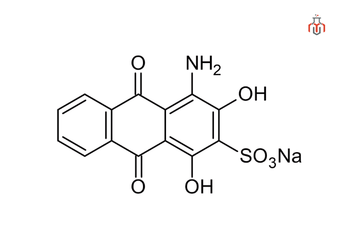
CAS No.: 6409-77-4
Synonyms: Calcium Red, Kernechtrot dye.
| Physical Properties | |
| Chemical formula | C14H8NNaO7S |
| IUPAC Name | sodium 4-amino-1,3-dihydroxy-9,10-dioxoanthracene-2-sulfonate |
| Molecular weight | 357.27 g/mol |
| Solubility | Soluble in water |
| Form | Powder |
| Storage | Store at Room Temperature |
| Chemical Properties | |
| Color | Red to dark brown powder |
| Physical state | Solid |
| Melting Point | >300° C |
The primary function of Nuclear Fast Red stain is as a nuclear counterstain in histology and histochemistry. It stains cell nuclei red after histochemical application that generates blue reaction products, improving tissue contrast and microscopic visualization.
It’s staining is commonly used in research and diagnostic laboratories to improve the clarity of cell nuclei and tissue architecture. It is commonly included in different histological staining methods where clear nuclear identification is required.
It has been used to counterstain renal collecting ducts, allowing researchers to distinguish these structures more clearly during tissue examination.
It is also used as a histochemical and colorimetric reagent for calcium determination in biological specimens.
The quality of the dye directly affects staining results. Before it is used, laboratories test the dye to confirm its identity and ensure it delivers reliable and accurate staining.
| Pictograms : |  |
| Hazard Statements : | H315: Causes skin irritation. H319: Causes serious eye irritation. |
| Precautionary statements : | P264: Wash skin thoroughly after handling. P280: Wear protective gloves/ eye protection/ face protection. P302 + P352: IF ON SKIN: Wash with plenty of water. P337 + P313: If eye irritation persists: Get medical attention. P362 + P364: Take off contaminated clothing and wash it before reuse. P332 + P313: If skin irritation occurs: Get medical attention. |
Nuclear Fast Red is a biological nuclear stain widely used in histology and histochemistry to visualize cell nuclei. It is also known as Kernechtrot, this nuclear fast red stain is commonly applied as a nuclear counterstain following histochemical procedures that produce blue reaction products. The resulting red-and-blue color contrast makes tissue structures easier to distinguish during microscopic examination.
In addition to Nuclear Fast Red staining, the dye is used to counterstain renal collecting ducts and as a histochemical and colorimetric reagent for calcium determination. Because staining quality depends on dye purity, laboratories use spectrophotometric, chromatographic, and biological staining methods to ensure reliable, consistent results.
CAS No.: 6409-77-4
Synonyms: Calcium Red, Kernechtrot dye.
| Physical Properties | |
| Chemical formula | C14H8NNaO7S |
| IUPAC Name | sodium 4-amino-1,3-dihydroxy-9,10-dioxoanthracene-2-sulfonate |
| Molecular weight | 357.27 g/mol |
| Solubility | Soluble in water |
| Form | Powder |
| Storage | Store at Room Temperature |
| Chemical Properties | |
| Color | Red to dark brown powder |
| Physical state | Solid |
| Melting Point | >300° C |
The primary function of Nuclear Fast Red stain is as a nuclear counterstain in histology and histochemistry. It stains cell nuclei red after histochemical application that generates blue reaction products, improving tissue contrast and microscopic visualization.
It’s staining is commonly used in research and diagnostic laboratories to improve the clarity of cell nuclei and tissue architecture. It is commonly included in different histological staining methods where clear nuclear identification is required.
It has been used to counterstain renal collecting ducts, allowing researchers to distinguish these structures more clearly during tissue examination.
It is also used as a histochemical and colorimetric reagent for calcium determination in biological specimens.
The quality of the dye directly affects staining results. Before it is used, laboratories test the dye to confirm its identity and ensure it delivers reliable and accurate staining.
| Pictograms : | |
| Hazard Statements : | H315: Causes skin irritation. H319: Causes serious eye irritation. |
| Precautionary statements : | P264: Wash skin thoroughly after handling. P280: Wear protective gloves/ eye protection/ face protection. P302 + P352: IF ON SKIN: Wash with plenty of water. P337 + P313: If eye irritation persists: Get medical attention. P362 + P364: Take off contaminated clothing and wash it before reuse. P332 + P313: If skin irritation occurs: Get medical attention. |
