
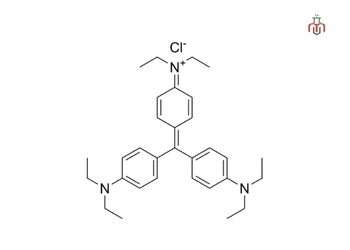
Ethyl Violet is a synthetic triphenylmethane (triarylmethane) dye and pH indicator widely used in biological staining, analytical chemistry, and industrial applications. It appears as a dark greenish powder with a characteristic metallic lustre and produces an intense blue-violet solution when dissolved in water or ethanol.
It functions as a cationic dye and binds strongly with negatively charged substrates such as cellulose fibres, microbial cell walls, and various biological tissues.
CAS No.:2390-59-2
Synonyms: Basic Violet 4; Hexaethyl Pararosaniline Chloride; Hexaethyl Pararosaniline Chloride; Violet Ethyl B; Ethyl Violet Hemi(Zinc Chloride) Salt
| Physical Properties | |
| Chemical formula | C31H42N3Cl |
| IUPAC Name | N-(4-(Bis(4- diethylamino)phenyl)methylene-2,5-cyclodexadien-1- ylidene)-N-ethylethanaminium chloride |
| Molecular weight | 492.14 g/mol |
| Solubility | Soluble in water, ethanol, and methanol |
| Chemical Properties | |
| Color | Dark green – Dark brown |
| State | Solid |
| Melting point | >250°C |
| Odor | Odorless |
| λmax | 596nm |
| Pictograms : |
|
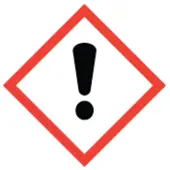
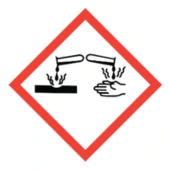
| Hazard Statements : | H318 Causes serious eye damage H302 Harmful if swallowed |
| Precautionary statements : | P280 Wear protective gloves/protective clothing/eye protection/face protection. |
Ethyl Violet is a synthetic triphenylmethane (triarylmethane) dye and pH indicator widely used in biological staining, analytical chemistry, and industrial applications. It appears as a dark greenish powder with a characteristic metallic lustre and produces an intense blue-violet solution when dissolved in water or ethanol.
It functions as a cationic dye and binds strongly with negatively charged substrates such as cellulose fibres, microbial cell walls, and various biological tissues.
CAS No.:2390-59-2
Synonyms: Basic Violet 4; Hexaethyl Pararosaniline Chloride; Hexaethyl Pararosaniline Chloride; Violet Ethyl B; Ethyl Violet Hemi(Zinc Chloride) Salt
| Physical Properties | |
| Chemical formula | C31H42N3Cl |
| IUPAC Name | N-(4-(Bis(4- diethylamino)phenyl)methylene-2,5-cyclodexadien-1- ylidene)-N-ethylethanaminium chloride |
| Molecular weight | 492.14 g/mol |
| Solubility | Soluble in water, ethanol, and methanol |
| Chemical Properties | |
| Color | Dark green – Dark brown |
| State | Solid |
| Melting point | >250°C |
| Odor | Odorless |
| λmax | 596nm |
| Pictograms : |
|
| Hazard Statements : | H318 Causes serious eye damage H302 Harmful if swallowed |
| Precautionary statements : | P280 Wear protective gloves/protective clothing/eye protection/face protection. |