

Biebrich Scarlet is a synthetic sulfonated azo dye commonly used in histology and biological staining. It is widely employed in trichrome staining techniques to differentiate cellular and connective tissue components by imparting a red color to cytoplasmic structures.
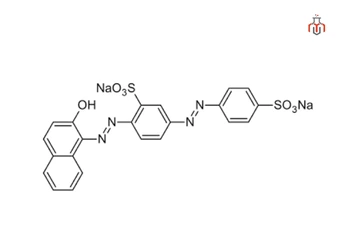
CAS No.: 4196-99-0
Synonyms: Ponceau BS; Croceine scarlet; Fenazo Scarlet B
| Physical Properties | |
| Chemical formula | C22H14N4Na2O7S2 |
| IUPAC Name | sodium 6-(2-hydroxynaphthylazo) -3,4′-azodibenzenesulphonate |
| Molecular weight | 556.49 g/mol |
| Solubility | Soluble in Etanol and water |
| Chemical Class | Azo dye |
| Chemical Properties | |
| Colour | Dark brown red |
| State | Solid Powder |
| Odor | Odorless |
| Melting Point | 181-188 °C |
| Storage Temp. | Room Temp. |
| Pictograms : |  |
| Hazard Statements : | H315: Causes skin irritation |
| Precautionary statements : | P260: Do not breathe dust/fume/gas/mist/vapours P264: Wash thoroughly after handling P280: Wear: protective gloves/ clothing & eye protection P302+352: IF ON SKIN: Wash with soap and water P305+351+338: IF IN EYES: Rinse with water for several minutes. Remove contact lenses if present and easy to do. Continue rinsing |
Biebrich Scarlet is a synthetic sulfonated azo dye commonly used in histology and biological staining. It is widely employed in trichrome staining techniques to differentiate cellular and connective tissue components by imparting a red color to cytoplasmic structures.
CAS No.: 4196-99-0
Synonyms: Ponceau BS; Croceine scarlet; Fenazo Scarlet B
| Physical Properties | |
| Chemical formula | C22H14N4Na2O7S2 |
| IUPAC Name | sodium 6-(2-hydroxynaphthylazo) -3,4′-azodibenzenesulphonate |
| Molecular weight | 556.49 g/mol |
| Solubility | Soluble in Etanol and water |
| Chemical Class | Azo dye |
| Chemical Properties | |
| Colour | Dark brown red |
| State | Solid Powder |
| Odor | Odorless |
| Melting Point | 181-188 °C |
| Storage Temp. | Room Temp. |
| Pictograms : | |
| Hazard Statements : | H315: Causes skin irritation |
| Precautionary statements : | P260: Do not breathe dust/fume/gas/mist/vapours P264: Wash thoroughly after handling P280: Wear: protective gloves/ clothing & eye protection P302+352: IF ON SKIN: Wash with soap and water P305+351+338: IF IN EYES: Rinse with water for several minutes. Remove contact lenses if present and easy to do. Continue rinsing |
