

May Grünwald Stain is a Romanowsky-type biological stain widely used in hematology, cytology, and parasitology for the differential staining of blood smears, bone marrow samples, and cellular components. It is composed primarily of eosin and methylene blue derivatives dissolved in methanol, which acts both as a solvent and fixative.
The stain provides excellent contrast between cellular components, enabling clear visualization of nuclei, cytoplasm, and intracellular inclusions. It is often used in combination with Giemsa stain as part of the May-Grünwald-Giemsa (MGG) staining technique.
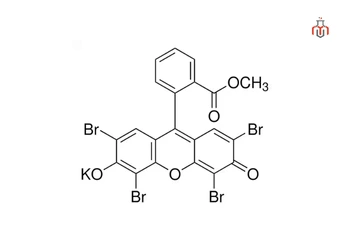
CAS No.:524698-43-9
Resources: Biological Stains | Classification, Examples & Uses
| Physical Properties | |
| Appearance | Dark green to blue colored solution |
| Odor | Characteristic alcoholic odor |
| State | Powder |
| Solubility | Soluble in methanol and ethanol; partially soluble in water |
| Storage | Store in a tightly closed container, away from heat, light, and ignition sources |
| Pictograms : |  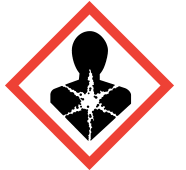 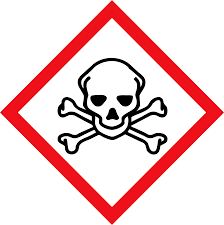 |
| Hazard Statements : | Hazard statements: H225 Highly flammable liquid and vapour. H301 + H311 + H331 Toxic if swallowed, in contact with skin or if inhaled. H370 Causes damage to organs (Eyes). |
| Precautionary statements : | Prevention: P210 Keep away from heat, hot surfaces, sparks, open flames and other ignition sources. No smoking. P280 Wear protective gloves/ protective clothing. Response: P301 + P310 + P330 IF SWALLOWED: Immediately call a POISON CENTER/ doctor. Rinse mouth. P302 + P352 + P312 IF ON SKIN: Wash with plenty of water. Call a POISON CENTER/ doctor if you feel unwell. P304 + P340 + P311 IF INHALED: Remove person to fresh air and keep comfortable for breathing. Call a POISON CENTER/ doctor. |
May Grünwald Stain is a Romanowsky-type biological stain widely used in hematology, cytology, and parasitology for the differential staining of blood smears, bone marrow samples, and cellular components. It is composed primarily of eosin and methylene blue derivatives dissolved in methanol, which acts both as a solvent and fixative.
The stain provides excellent contrast between cellular components, enabling clear visualization of nuclei, cytoplasm, and intracellular inclusions. It is often used in combination with Giemsa stain as part of the May-Grünwald-Giemsa (MGG) staining technique.
CAS No.:524698-43-9
Resources: Biological Stains | Classification, Examples & Uses
| Physical Properties | |
| Appearance | Dark green to blue colored solution |
| Odor | Characteristic alcoholic odor |
| State | Powder |
| Solubility | Soluble in methanol and ethanol; partially soluble in water |
| Storage | Store in a tightly closed container, away from heat, light, and ignition sources |
| Pictograms : | |
| Hazard Statements : | Hazard statements: H225 Highly flammable liquid and vapour. H301 + H311 + H331 Toxic if swallowed, in contact with skin or if inhaled. H370 Causes damage to organs (Eyes). |
| Precautionary statements : | Prevention: P210 Keep away from heat, hot surfaces, sparks, open flames and other ignition sources. No smoking. P280 Wear protective gloves/ protective clothing. Response: P301 + P310 + P330 IF SWALLOWED: Immediately call a POISON CENTER/ doctor. Rinse mouth. P302 + P352 + P312 IF ON SKIN: Wash with plenty of water. Call a POISON CENTER/ doctor if you feel unwell. P304 + P340 + P311 IF INHALED: Remove person to fresh air and keep comfortable for breathing. Call a POISON CENTER/ doctor. |
